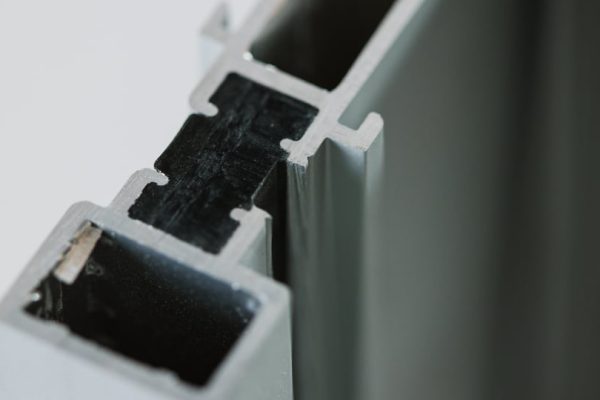

Optimizing Thermal Performance in Fenestration: Choosing the Right Polyurethane System
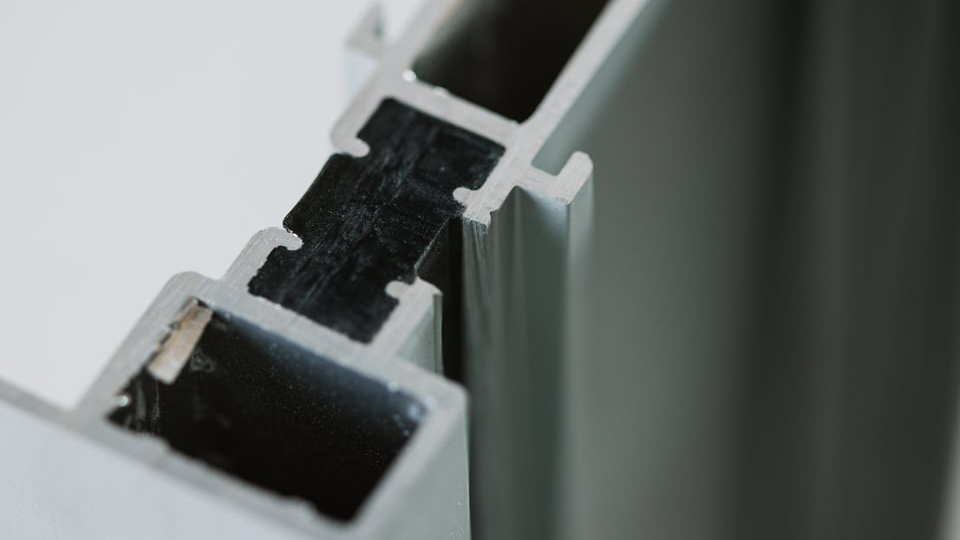
The case for polyurethane over polyamide in aluminum fenestration is well established: lower thermal conductivity, higher shear and tensile strength, and a manufacturing process that eliminates strut inventory. What often gets treated as a single material choice, however, is actually a range of systems. Solid polyurethane and polyurethane foam serve different structural and thermal requirements, and selecting between them, and their different formulations, has a direct impact on U-factor performance and fabrication outcomes.
Solid Polyurethane: Applications with High Structural Strength Requirements
Solid Pour and Debridge polyurethane is formulated for applications where structural strength requirements exist. In curtain wall systems and other large-format fenestration, the aluminum extrusions containing thermal barriers help to achieve high structural performance by resisting high shear, tensile, and torsional forces over the life of the building. Solid polyurethane systems deliver tensile strength of 5,500 ± 1,000 psi and a thermal conductivity K-factor of 0.21 W/m-K (1.456 Btu-in/hr-°F-ft²). That combination of structural integrity and thermal performance is why solid polyurethane remains the standard for structurally demanding profiles.
Polyurethane Foam: Maximizing Thermal Performance
Where thermal performance is the primary driver, rigid polyurethane foam systems such as AzoCore lower the conductivity rating further. AzoCore TBF 10-series foam tests at 0.029 W/m-K (0.201 Btu-in/hr-°F-ft²), roughly seventy-two times lower than polyamide. The AzoCore TBF 20-series foam, formulated for a different density and processing profile, tests at 0.047 W/m-K (0.327 Btu-in/hr-°F-ft²), still well below polyamide while offering a different balance of cure characteristics for the fabricator’s process. For window and door systems targeting aggressive U-factor requirements under IECC or ASHRAE 90.1, or for projects pursuing passive house or net-zero certification, foam systems provide the thermal margin that solid polyurethane or polyamide cannot match.
Cavity Size Matters
Material selection is only part of the equation. Foam systems need room to expand, so the aluminum cavity has to be sized to accommodate that expansion, and a larger cavity also increases the width of the polymer between the interior and exterior aluminum, which improves thermal performance. But cavity size is not a free variable. It is typically limited by the fenestration system’s profile design, and a sleek, narrow-sightline system may simply not have the room a foam system needs. In those cases, solid polyurethane, which is poured to fill the cavity as dispensed and does not require an expansion allowance, is the system that best fits the available geometry. The choice between foam and solid polyurethane is frequently dictated by the design of the profile and not chosen by the specifier.
A Third Consideration: Production Efficiency
Thermal performance and structural performance are not the only variables. Within the solid polyurethane category, formulation also affects how a system runs on the production line. Universal No-Tape formulations, a family of patented thixotropic solid polyurethane systems, are engineered to address a specific fabrication problem: conventional formulations remain fluid throughout a 14 to 35 second gel time, requiring extrusion ends to be taped to contain the material during cure. No-Tape transitions to a thick, pudding-like consistency within 3 seconds and gels completely in under 15 seconds, eliminating the need for end taping without sacrificing the thermal or structural performance expected of a solid system. For fabricators, that formulation difference removes a manual labor step and reduces material waste at the extrusion ends, a production efficiency gain layered on top of the thermal barrier’s core performance.
Conclusion
Polyurethane outperforms polyamide as a category, but treating polyurethane as a single material overlooks the performance range available within it. Solid systems support the structural demands of curtain wall and large-format fenestration. Foam systems push U-factor performance lower for windows, doors, and high-efficiency targets. Within the solid category, formulation differences like those in Universal No-Tape can also affect production efficiency without compromising performance. The right choice depends on which requirement, thermal conductivity, structural load, or fabrication efficiency, is driving the specification, and on whether the profile’s cavity size leaves that choice open at all.