
Azon International Pour & Debridge

Pour and Debridge: Decades of Innovation in Thermal Barrier Systems

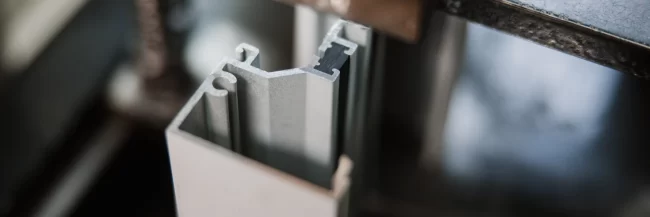
When thermal efficiency, structural integrity, and long-term durability matter, fenestration manufacturers turn to Azon. From the chemistry inside the profile to the machinery on the line, we engineer every element of the thermal barrier process.
Pour and Debridge

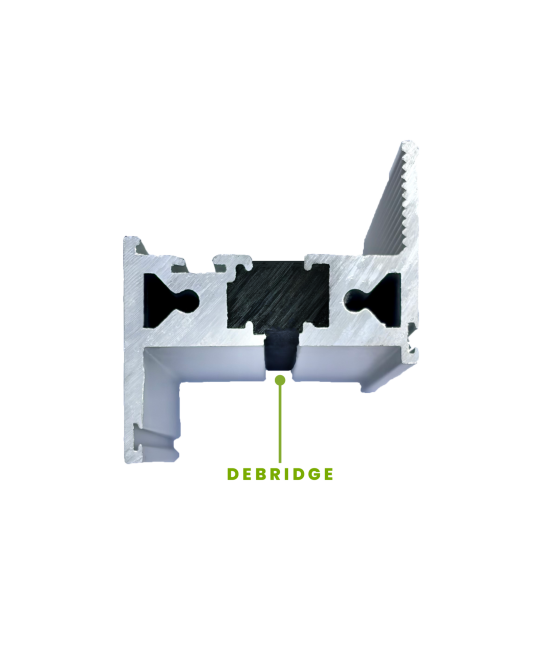
Pour and Debridge is the established method for creating high performance thermal breaks in aluminum fenestration systems. The process begins with the formation of a mechanical lock within the extrusion cavity, followed by the precise metering, mixing, and dispensing of two-part polyurethane, and finally debridging to remove a strip of aluminum to complete the thermal barrier.
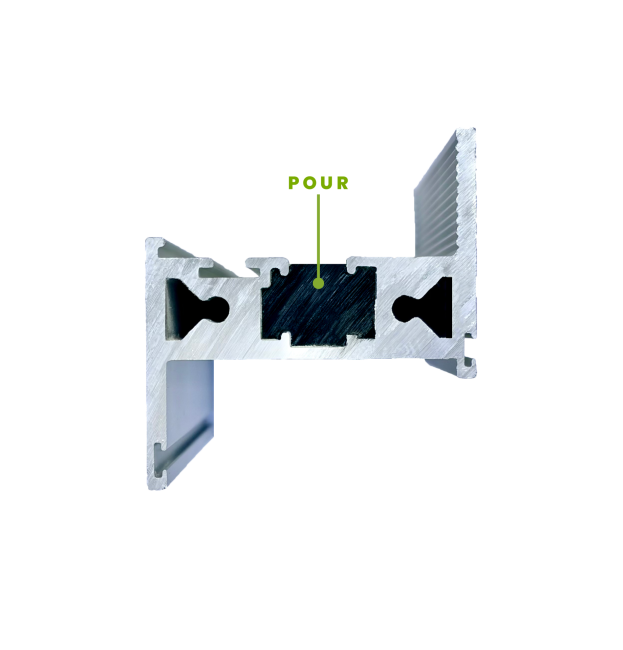
How It Works

Step
1

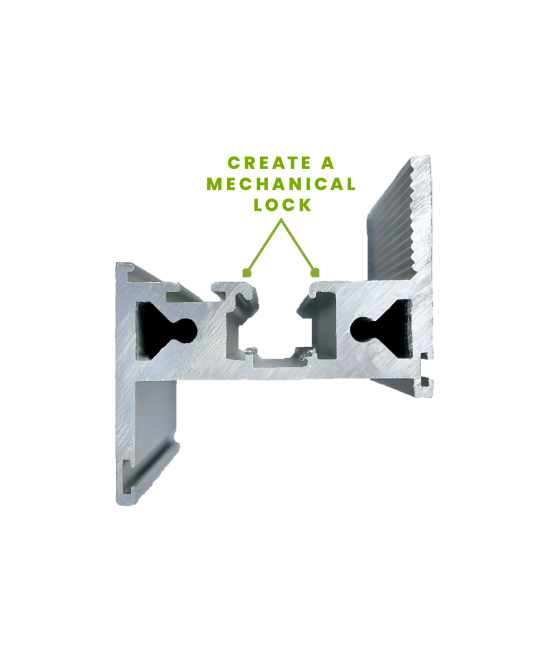
Create a Mechanical Lock

The interior surfaces within the thermal barrier cavity of the aluminum extrusion are mechanically conditioned by forming retention tabs. These lanced tabs anchor the polyurethane as it cures, securing the material in place and helping prevent separation, shrinkage, or cracking over time.

Step
2

Pour

Precisely metered two-part polyurethane is dispensed into the thermal barrier channel. Within minutes, the material cures, bonding to the aluminum and forming a structural composite within the extrusion.

Step
3

Debridge

A section of aluminum is mechanically removed from the base of the thermal barrier cavity, eliminating metal-to-metal contact between the interior and exterior portions of the profile. This final operation establishes the true thermal break, resulting in a high-performance aluminum-polymer composite with strong thermal efficiency, impact resistance, and shear capacity.